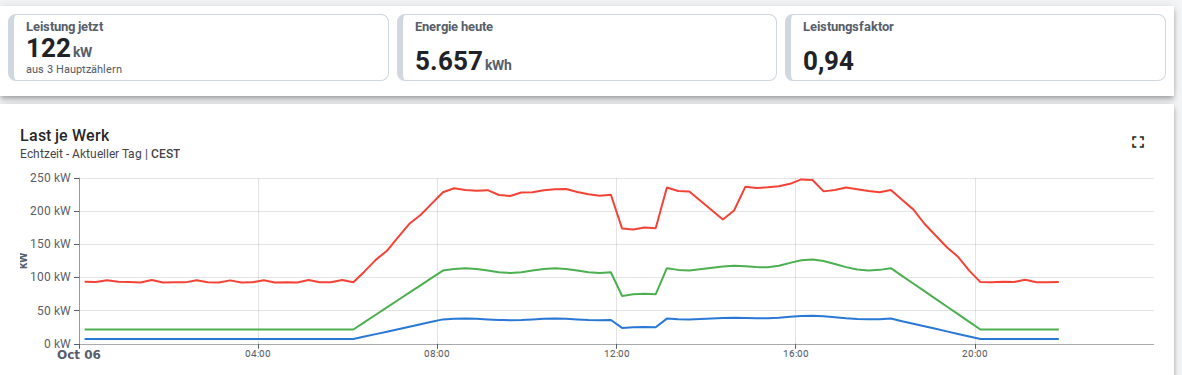
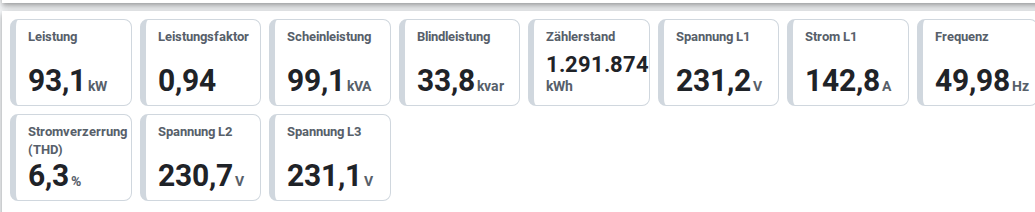
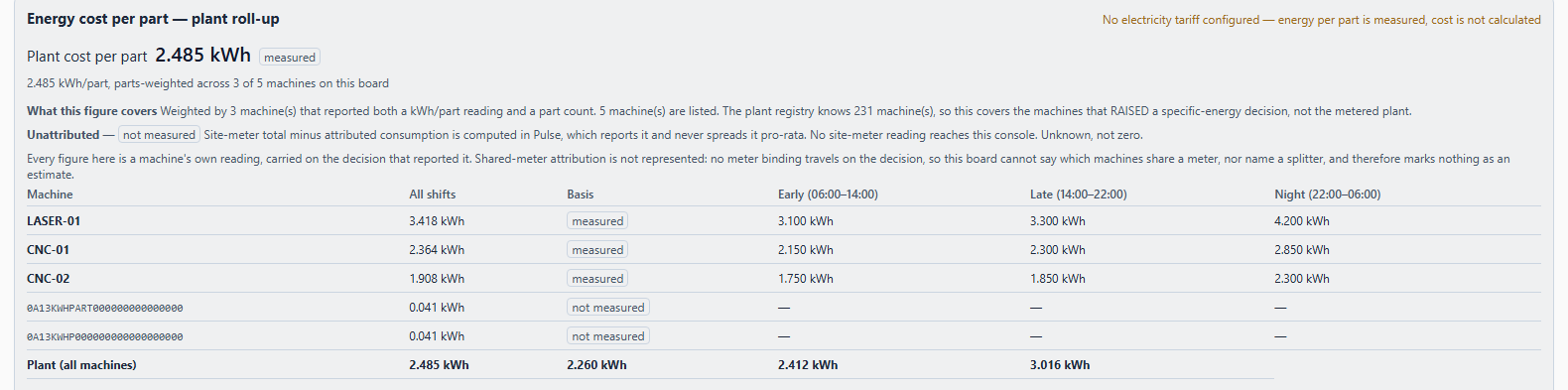
A Tier-2 foundry casts EV motor housings and structural parts on fourteen cells of three makers and three vintages, fed by gas melting furnaces and electric holding furnaces. Customers now ask for a product carbon footprint per part. The plant knows its monthly bill and its monthly scrap; it does not know what one housing cost in kWh, which cell made it, or whether the X-ray that rejected it was looking at a melt problem or a die problem. This report shows the plant's own meters, cells and inspection stations on one read-only record, the six quantities the board asks for, and what changes when the shot itself is the unit of account. Every result is modelled from the inputs on sheet 7.
The casting mark of this report: one shot is a biscuit, a runner, a gate, the part and its overflow wells. The plant pays for all of it, melts the biscuit and runner again, and sells the part. Three read points, all read-only, turn that shot into a record: the furnace meter, the cell's own shot counter and cycle signals, and the X-ray result. Nothing is written back to a furnace, a machine or a PLC. Pragmatos reads; people decide.
The Managing Director who signs the customer's carbon declaration, the Head of Foundry who owns scrap and melt loss, and the Sustainability lead who has to produce a defensible kg CO2e per part without a second data entry team.
Furnace and holding-furnace supply meters, cell shot and cycle signals, die temperature units, the X-ray station's verdict per serial, charge-scale weights, and the plant's cost rates and emission factors, each with its source and date.
Not a furnace controller, not a cell controller, not a setpoint. Pragmatos Live reads through a wizard-mapped point list with zero write paths. Decisions go through a named person; the record keeps who, what and why.
A die-casting plant grows one cell at a time. The newest cells speak a machine interface; the oldest give a shot-counter contact and nothing else. The furnaces came from a different supplier again. The question is not "which do we replace" but "how do we read all of them at once without a project per cell".
| Stage | Equipment (maker lettered, vintage) | Count | Carrier | What is known today | How it is read with Pragmatos |
|---|---|---|---|---|---|
| Melting | Gas shaft furnaces, maker A, 2009 and 2016; electric crucible furnace for returns, maker B, 2021 | 3 | Gas · electricity | Monthly gas bill; furnace hour meter read by hand | Supply meters on gas and electricity; charge scale read through its own interface |
| Holding | Electric resistance holding furnaces at each cell, maker B, 2011 to 2023 | 14 | Electricity | Nothing per furnace; part of the hall feeder | One meter per holding furnace feeder; the base load becomes visible |
| Casting | Cold-chamber cells, maker C, 2019 to 2023, with machine interface | 6 | Electricity · hydraulics | Shot counter and cycle time on the machine screen | Existing interface, read-only: shot number, cycle phases, alarms |
| Casting | Cold-chamber cells, maker D, 2011 to 2015, no interface | 5 | Electricity · hydraulics | Shot counter on paper at shift end | Shot-counter contact and a cell supply meter; cycle from the contact timing |
| Casting | Cold-chamber cells, maker E, 2004 to 2008 | 3 | Electricity · hydraulics | Shot counter on paper; energy unknown | Added sensor on the plunger stroke plus a supply meter; nothing changed on the machine |
| Die temp. | Oil and water temperature control units, one to three per cell | 31 | Electricity | Setpoint on the unit's display | Unit interface where present, feeder meter where not; read-only |
| Inspection | X-ray stations (2) and one CT for first-off and disputed parts | 3 | Electricity | Verdict per part in the station's own log | Verdict and serial read from the station log; linked to the shot that made the part |
| Finishing | Trimming presses and five-axis machining centres | 11 | Electricity · compressed air | Machining scrap counted per lot | Machine interface on the centres; press contacts; scrap note per serial |
| Site | Compressed air, cooling water, hall ventilation | – | Electricity | One site meter, one bill | Main meters plus the feeders above; the remainder is reported as unattributed, never spread |
Makers are lettered because the archetype is the point, not the supplier. Counts and vintages are the archetype's inputs, not a customer's inventory.
A kg CO2e figure per part, cradle-to-gate, on the supplier's letterhead. A European Tier-1 has asked its suppliers for a PCF since 2022S9. Group reporting under CSRD wants the same number rolled up by site. From 2026 the definitive CBAM regime prices embedded emissions in imported aluminiumS4, so the ingot's footprint reaches the metal invoice.
The site bill, the gas bill, the tonnes of ingot bought and the tonnes of good parts dispatched. From these a yearly kWh per tonne good cast can be calculated once a year. Scrap is counted per lot on the X-ray station and at machining; melt loss is estimated from metal purchases minus shipments.
The kWh of one housing, by cell and by shift. The share of the bill that is holding furnaces idling through breaks and weekends. Whether a rejected part came from a melt that was held too long or a die that ran too cold. A declaration that a customer's auditor can trace back to meters, not to an allocation key in a spreadsheet.
Designed for the EU AI Act's human-oversight and logging requirements. Whether your use meets the Act is for you and your advisers to assess.
An X-ray station writes a ticket for every rejected part. These eight are the tickets a foundry's own numbers write against the business. Each one carries its public source; the archive copy sits in the evidence folder of this study.
German non-household electricity stands at 19.33 ct per kWh in the first half of 2025; only the largest consumers reach 13.38 ctS5. The foundry association and the metalworkers' union jointly call electricity "three to four times as expensive" as abroad and ask for 6 ctS8. The plant cannot set the price. It can know, per part, what it buys at that price.
A 2011 foundry-industry survey puts die casting at around 5,600 kWh per tonne of good casting and about 2.5 t CO2 per tonne, against a foundry average of 2,000 kWh per tonneS6. The yearly figure is one division. The figure per cell, per shift and per part is what moves it.
A gas shaft furnace needs 580 to 900 kWh to melt one tonne of aluminiumS7. Against 5,600 kWh per good tonne, the rest is holding, hydraulics, die temperature units, compressed air and the remelting of biscuits, runners and scrap. Most of that load runs whether or not a shot is made.
Porosity accounts for about 70 % of failures in high-pressure aluminium die castingS10. A part rejected at X-ray or opened up at machining has already paid for its melt, its hold, its shot and its trim, and goes back into the furnace to pay again. At 6 % scrap, that is 137,000 housings a year on this archetype.
A European Tier-1 asked its suppliers for a product carbon footprint from November 2022, cradle-to-gate, following the GHG Protocol product standardS9. Each request costs the Sustainability lead about two days of spreadsheet work on this archetype, forty times a year, and the next one asks for the same part again with this year's factor.
The German grid factor is 363 g CO2 per kWh for 2024, after 386 in 2023 and 433 in 2022S1. A declaration that bakes the factor into a formula has to be rebuilt each year. On the record the factor is an input with a date and a source, applied to the metered kWh of the part.
European primary aluminium carries 6.3 kg CO2 per kg; recycling needs about 5 % of the primary energyS3. For a 4.2 kg housing that is 26.5 kg from the ingot against 7.4 kg from the plant's own energy. The two numbers belong on the same declaration, in separate lines, so the plant is judged on the line it owns.
Since 1 January 2026 the carbon border adjustment mechanism applies under its definitive regime, with aluminium among the covered sectorsS4. Imported ingot arrives with a certificate cost attached to its embedded emissions. The buyer who can show its own gate-to-gate number per part, separately, keeps the conversation on what it controls.
Sources S1 to S10 are listed in full on sheet 7. Quotes in the evidence archive are verbatim; the figures on this sheet are the published figures, not the plant's. Cost rates, factors and share assumptions used in the model are marked C-xx on sheet 7 and can be replaced by the plant's own.
Every read point below is a tap on something the plant already has. The record that results is one line per shot: which furnace charge, which holding furnace, which cell, which shot number, the cycle phases and their timing, the kWh the cell and its holding furnace drew during the cycle, the X-ray verdict for the serial, and the machining outcome. Each module touches that line once.


The published die-casting average is the archetype's starting pointS6. Split by stage from the plant's meters, two things stand out: holding furnaces and cell base load run through every break, and every rejected part drags its whole stack back to the furnace. The modelled bar below applies the four energy levers of sheet 7; the € and PCF-effort levers do not move kWh and are not in it.
| Quantity | Before: yearly, from bills | With: per shot, from the record |
|---|---|---|
| kWh / t good cast | One number a year, bill divided by tonnes dispatched. | Per cell, per shift, per charge; stage split from meters; unattributed share stated. |
| Scrap | Per lot, on paper, cause guessed at the morning meeting. | Per serial with the shot's phase times, holding time of the melt and die temperature beside the verdict. |
| Melt loss | Purchases minus shipments, once a quarter. | Per furnace and charge from the charge scale, against holding time. |
| kg CO2e / part | Two days per request, fixed factor, allocation key in a spreadsheet. | Metered kWh of the part × the dated factor; ingot share on its own line; export per part and period. |
| € energy / part | Unknown; quoted from a plant average. | Per part family and cell, with the tariff and its source on the line. |
| Cell OEE | From the shot counter on paper. | Per cell, shown only once 90 % of time is accounted for; the rest reported as unknown. |
What the Sustainability lead sends the customer is not a number but a provenance: which meters, which allocation rule, which factor with its date, which shots, signed by whom. Decisions exports it per part, per cell, per period or per company. The customer's auditor reads the same record the shift leader approved from.

Part history per serial. Charge, holding furnace, cell, shot, phase times, X-ray verdict, machining outcome: the genealogy a field return needs, years later.
Digital nameplate. Each cell, furnace and meter carries its asset data in the Asset Administration Shell form (IEC 63278), so the customer's or the auditor's tools read it without a phone call.
Retention. Records kept for the life of the part plus one year, up to fifteen years, matching what the Tier-1 contracts ask for.
ISO 50001. The energy baseline and performance indicators of sheet 4 are the management-review input; the metering concept to DIN EN 17267 is the document the certifier asks for first.
Capability gaps, named. No die-casting machine or furnace interface is in the product today; the read path is a contact, an added sensor and a meter until there is one. No emission-factor field per energy carrier and no PCF export per part exist as product screens yet; both are modelled here from the per-part energy figure and are open questions for the product team. Charge-scale and X-ray readings reach the record only where those systems expose a log.
The rollout follows the plunger. A slow first phase while the melt shop meters go on and the point lists are signed; a fast phase through the fourteen cells; intensification while Pulse settles the allocation and the first PCF export is checked against last year's spreadsheet; then hold, the operating rhythm. No cell stops for any of it: every tap is a meter, a contact or a read-only interface.

Put your own figures in the C column and the R column follows. Rows marked plant are what the foundry knows; rows marked ASSUMED have no public source and are the first to replace.
| Id | Input | Value | Source |
|---|---|---|---|
| Plant | |||
| C-01 | Good cast dispatched a year | 9,000 t | plant |
| C-02 | Casting yield, net part ÷ shot weight | 0.55 | plant |
| C-03 | Scrap after X-ray and machining | 6.0 % | plant |
| C-04 | Melt loss, share of metal melted | 3.0 % | plant |
| C-11 | Net part mass, housing | 4.2 kg | plant |
| C-16 | Casting cells | 14 | plant |
| C-17 | Planned hours per cell a year | 6,000 h | plant |
| Energy and factors | |||
| C-05 | Energy per tonne good cast, all carriers | 5,600 kWh/t | S6 |
| C-06 | of which gas, melting | 1,650 kWh/t | ASSUMED |
| C-07 | Electricity, non-household, H1 2025 | 19.33 ct/kWh | S5 |
| C-08 | Natural gas, non-household, H1 2025 | 6.75 ct/kWh | S5 |
| C-09 | Grid factor 2024 | 0.363 kg/kWh | S1 |
| C-10 | Natural gas factor, Hi | 0.20 kg/kWh | S2 |
| C-23 | Melt and hold one tonne of returns | 1,000 kWh/t | S7 band + hold |
| C-24 | Stage split of C-05 (sheet 5 chart) | 6 stages | ASSUMED |
| Cost rates and levers | |||
| C-12 | Conversion cost of a scrapped part beyond energy | €4.00 | ASSUMED |
| C-13 | Metal lost to dross, net of recovery | €2,000 /t | ASSUMED |
| C-14 | 15-minute peak | 6,500 kW | ASSUMED |
| C-15 | Peak price | €120 /kW·a | ASSUMED |
| C-18 | Idle draw of a cell with its DTC units | 95 kW | ASSUMED |
| C-19 | PCF requests a year | 40 | ASSUMED |
| C-20 | Effort per request, today | 2.0 d | ASSUMED |
| C-21 | Effort per request, from the export | 0.25 d | ASSUMED |
| C-22 | Day rate, engineer | €450 | ASSUMED |
| L | Levers: base load −3 % · scrap → 5.0 % · melt loss → 2.7 % · peak −3 % · OEE +2 pts | five | ASSUMED |
| Id | Derived and results | Value | How |
|---|---|---|---|
| Derived | |||
| D-1 | Parts a year | 2,142,857 | C-01 ÷ C-11 |
| D-2 | Electricity per tonne | 3,950 kWh/t | C-05 − C-06 |
| D-3 | Energy bill | €7,874,190 | C-01 × (D-2 × C-07 + C-06 × C-08) |
| D-4 | kWh per part · € per part | 23.5 · €3.67 | C-05 × C-11; el × C-07 + gas × C-08 |
| D-5 | kg CO2e per part, gate to gate | 7.41 | 16.6 × C-09 + 6.9 × C-10 |
| D-6 | Ingot embodied, shown not counted | 26.5 kg/part | C-11 × 6.3 (S3) |
| D-7 | Scrapped parts a year, today | 136,778 | D-1 ÷ (1−C-03) × C-03 |
| D-8 | Metal melted a year · melt loss | 17,947 t · 538 t | C-01 ÷ C-02 ÷ (1−C-03) ÷ (1−C-04) |
| Results, € a year | |||
| R-01 | Base load, 3 % of electricity | 206,154 | C-01 × D-2 × 3 % × C-07; 118.5 kWh/t |
| R-02 | Scrap 6.0 → 5.0 % | 178,871 | energy C-05 × (1 − 0.94/0.95) = 58.9 kWh/t → 82,886; conversion 23,996 parts × C-12 = 95,985 |
| R-03 | Melt loss 3.0 → 2.7 % | 114,402 | D-8 at both rates: 55.3 t × (C-13 + C-23 × C-08) |
| R-04 | Peak −3 % | 23,400 | C-14 × 3 % = 195 kW × C-15 |
| R-05 | OEE +2 points, idle draw | 30,851 | C-16 × C-17 × 2 % × C-18 = 159.6 MWh × C-07; 17.7 kWh/t |
| R-06 | PCF effort | 31,500 | C-19 × (C-20 − C-21) = 70 d × C-22 |
| Σ | Total, 7.4 % of D-3 | 585,178 | half 292,589 · double 1,170,356 |
| Δ | kWh/t · kg CO2e/part · €/part | 5,399 · 7.12 · 3.52 | energy lines applied to D-4, D-5 |
| S | Sensitivity, electricity at 13.38 ct | bill €5,758,965 | S5 band above 150 GWh; R-01, R-02, R-05 scale with it |
Weakest metric: R-04. The peak tariff component and the kW that can wait have no public source. Second weakest: R-06, an effort figure, not a meter reading. Not counted: ingot embodied carbon (D-6), scrap-metal recovery value, any claim on porosity cause. Non-overlap: R-02 lowers energy per good tonne, R-03 metal mass, R-05 idle hours, R-01 a share of what is left; R-04 and R-06 are tariff and effort.
S1 Umweltbundesamt, spezifische Treibhausgas-Emissionen des deutschen Strommix 1990–2024 (Climate Change 2025): 363 g CO2/kWh 2024; 386 in 2023; 433 in 2022.
S2 Umweltbundesamt, CO2-Emissionsfaktoren für fossile Brennstoffe, 2022: natural gas 202.022 g CO2 per kWh (Hi), rounded here to 0.20 kg.
S3 European Aluminium, Environmental Profile Report 2024: 6.3 kg CO2e per kg European primary aluminium, cradle to gate; recycling at about 5 % of the primary energy.
S4 European Commission, Carbon Border Adjustment Mechanism: definitive regime from 1 January 2026; aluminium is covered.
S5 Statistisches Bundesamt, Erdgas- und Strompreise für Nicht-Haushalte, 1. Halbjahr 2025: electricity 19.33 ct/kWh average; 13.38 ct above 150,000 MWh; gas 6.75 ct/kWh.
S6 Giesserei trade journal, 2011, die-casting energy study: about 5,600 kWh and 2,500 kg CO2 per tonne good cast for the die-casting route; about 2,000 kWh per tonne as the foundry average.
S7 Giesserei-Lexikon, Schachtofen: 580 to 900 kWh per tonne for melting aluminium in a gas-fired shaft furnace.
S8 BDG and IG Metall joint position, 20 March 2026: German industrial electricity three to four times the price in competing regions; a target of 6 ct/kWh.
S9 A Tier-1 supplier guideline on product carbon footprints, 2025 edition: PCF requested from suppliers since November 2022, cradle to gate.
S10 Springer, International Journal of Metalcasting, 2016, high-pressure die casting defect study: porosity accounts for about 70 % of failures.
All ten are archived with their retrieval date in the study's evidence folder. No customer, vendor or OEM is named on these sheets; the plant on sheet 2 is an archetype composed from the public record.